Follow Us:
Adventures in a year old Land Rover!

Electrical Diagrams

Land Rover Series Electrical Diagrams

Our early Land Rover Series 2 was built in Solihull (Birmingham) in the UK, and they were built with a Positive Earth electrical system, which was pretty standard at the time; however, more and more vehicles were being built with a negative earth, because it helped reduce galvanic corrosion of the electrical systems.

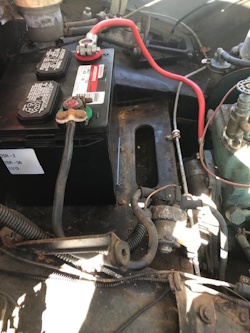
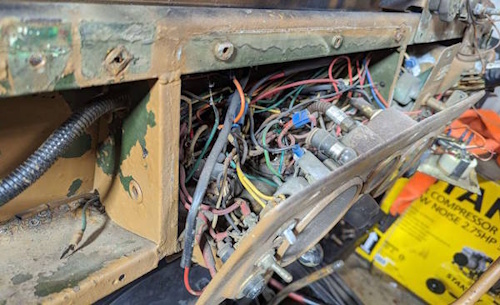
When our Land Rover reached Australia in late 1960, the Australian Army converted it to a Negative Earth system, leaving behind a bit of a spaghetti mess of wires, which is visible in the image below.  Further changes and additions to the electrical system when our Land Rover was a farming vehicle made the wiring worse, so it was much easier to rip it all out and start again.

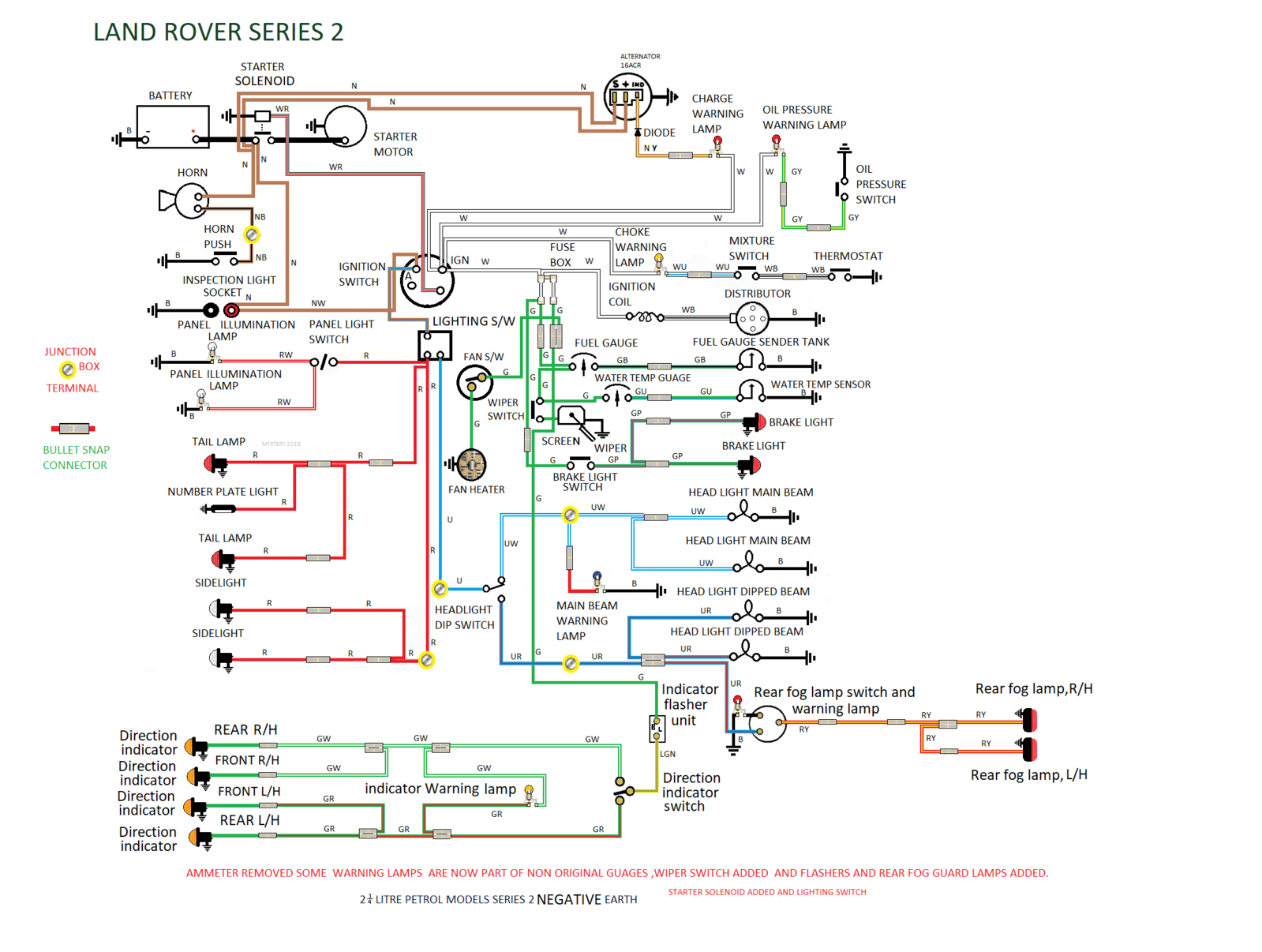
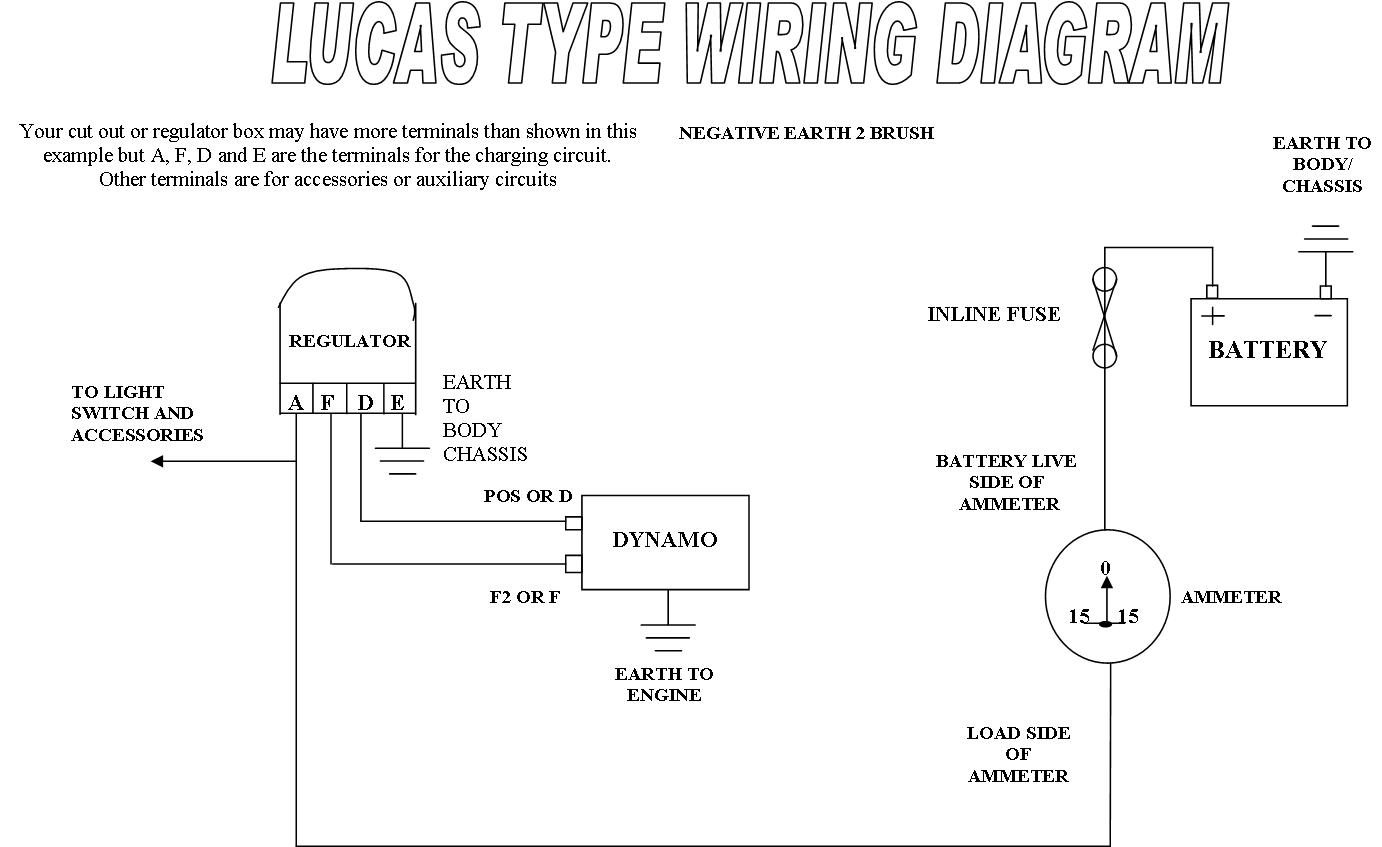
To the right is the main electrical diagram I used when rebuilding the system, together with a few diagrams and documents I used to fault-find issues with the dynamo and the regulator.  In addition to the items on the diagram, I have also installed a winch on the front and some more interior lighting; however, apart from that, it is pretty much how the diagram was set out.  For the starter motor, I have a solenoid that makes the connection, and the main electrical system is enabled with a continuous solenoid.  The winch is enabled by a switch on the dashboard, which enables a second continuous solenoid.

The only item I did not connect up was the Amp Meter, because I don't really fancy 40-50 amperes of electricity coming through the firewall of the vehicle and into a 65-year-old gauge. Instead, I have installed a volt metre to help reduce some potential fire risk.
Electrical Diagrams

Issues Encountered - Problems Solved!

Distributor Rotor Arm Failure

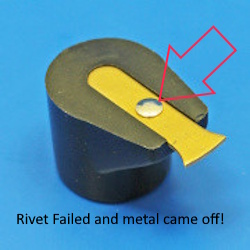
Whilst driving up a hill for a small test drive, the engine just suddenly stopped, without a splutter or any noticeable symptoms. After rolling backwards down the hill to some flat ground, several things were examined, including any earthing issues. The entire ignition system was taken apart one piece at a time to try to identify the issue.  I even replaced the ignition coil to see if that was the issue.  In the end after inspecting the distributor cap for a third time, I noticed that the small metal connector on the top of the rotor arm had come off.  Somehow the rivet on the top had failed and the metal flew off was on the base of the distributor.  This must have been a very poorly made part for it to do this.  In the end, I used some epoxy glue and a small screw to secure it back on.


Voltage Regular / Amp Meter Fire

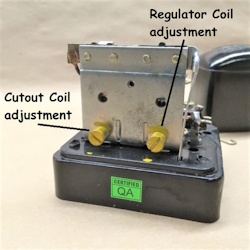
The Brand new Dynamo and Voltage Regulator combo from Paddock Spares easily pushes out 45 amps and I hadn't tweaked the voltage regulator, so as the revs increased so did the voltage and amperage of the output. As part of the electrical set-up to the dashboard, I tried to use the original Land Rover amp meter, which ranged from +30 Amps to -30 Amps, however, after running up the engine for a test, there was quite a lot of smoke from inside the dashboard. After disconnecting it and running some tests with a voltmeter, the generator wasn't being regulated, and it was generating over 20 volts and 45 amps. Enough to cause the smoke and to kill the LED warning lamp for the charging. Reminder, voltage regulators are not 'plug and play' and need the two small screws at the back to be tweaked.


Battery Earth Suddenly Weak

After multiple small test drives and stopping and starting the engine to try and fault-find the voltage regulator above, I was tightening up dashboard switches and then was unable to restart the vehicle to put it back into the shed. As soon as I pressed the starter button or even tried to turn on the engine fan (probably the most power-hungry feature on the vehicle after the starter motor), the main solenoid of the car would start tripping and buzzing. Power was then out for a minute or two, but then fewer and fewer switches and features would work. The voltage of 12.95v at the battery would turn into less than 2v at the second switch in the dashboard, although sometimes it would be 12v and other times 1v. After dismantling more and more switches, including the starter motor and the winch, I suddenly found that putting the volt meter probe onto the securing bolt on the negative terminal on the battery made things work again. Over 2 days were spent on this! Removing the battery clamp, giving it a good clean and then securing the bolt again, seemed to fix things. It appears that whilst I was fighting with the brakes, some brake fluid got onto the battery terminals, so it was possibly that. Bad words were said!.


Completed Landy Camper Build Original Wiring Mess
Before After

The Bigger Picture

From a Brisbane Shed to the Streets of The World!

65

Years Old

You've seen the wiring mess I started with, but this 1960 Series 2 (ARN 111-387) has a much bigger mission. I am currently transforming this ex-Army workhorse into a fully-equipped off-road camper to start exploring the streets of the world again.

The Build: See how we're fitting water tanks and custom cabinets.
The Restoration: 3 years and many cuts and burns.
Getting the electrics right was just the start.

Restoring a Land Rover and taking her back on the road again after so many years has led to a few roadside mishaps!

View the Break Down Log


Do you like this page or find it useful?