Engine Replacement
Rebuilding and Installing a Land Rover Series Engine
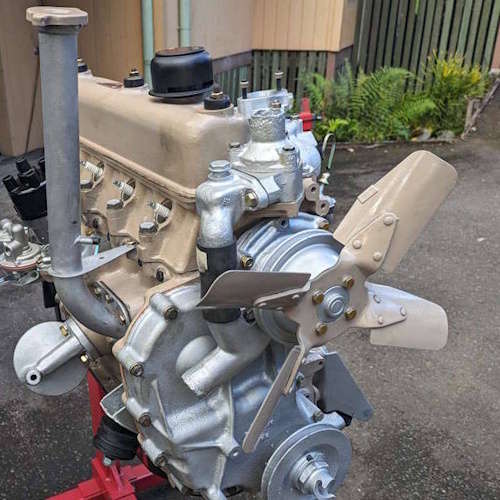
The Landy arrived with a Holden 202 (V6) engine, which was a common conversion in the 1980s. I managed to get the engine started, however after a few minutes of surging, it went 'crunch' and totally seized. I managed to find a block and an head that has been outside in a yard for several years and the pistons needed 20 tonnes of pressure to remove. It was then machined and I searched the internet for the remaining parts.
The approximate cost for the engine, machining and all of the parts to get it running again was around AU$5000. The air filter canister was the most expensive, followed by getting someone to machine a left hand thread bolt for the timing chain sprocket to the cam shaft.
The Differential Dilemma
One thing I didn't predict was that when the old Holden 202 was installed, they also changed the differentials from the standard 4.7:1 ratio to 3.55:1. I only discovered this when I installed a brand new calibrated speedo and the speed was around 24% too low.
The plus side: Going back to the 2.25L engine with these lower ratios means highway cruising is much quieter - I am effectively in 5th gear, don't need to buy an overdrive, and have a much happier engine.
The downside: On hills and pulling away, my first gear is effectively a second gear. I sometimes have to drop into low-range for very steep hills, which can lead to a slightly unhappy engine and makes free-wheeling hubs essential if I am driving up steep bitumen roads.
Here's a thought...
Back in 1960, the Owners Manual (on the right) told you how to reset the valve gap and how to bleed the clutch system. In 2025, car owner manuals tell you not to drink the fluid in the car battery. How times have changed!
