Vehicle Comfort & Habitability
Making a -year old Series Land Rover long-distance friendly
Driving a vintage series vehicle across continents requires a delicate balance between respecting its rugged mechanical heritage and introducing modern creature comforts. After putting blood, sweat, and tears into the full frame-off restoration and custom camper build, we've fine-tuned the cabin to ensure we survive extreme tropical conditions without melting. Alongside our carefully curated spare parts inventory, these modifications keep the Landy rolling and the crew smiling.
Thermal Insulation Arsenal
How Not to Cook the Passenger: Heat Shielding
Series Land Rovers are legendary for running hot exhaust headers, gearboxes, and transfer cases right beneath your feet, which can easily transform the footwells into a baking oven. Here is the step-by-step breakdown of how we built a multi-stage thermal insulation defense system to protect the navigator (and Peanut!) from overheating.
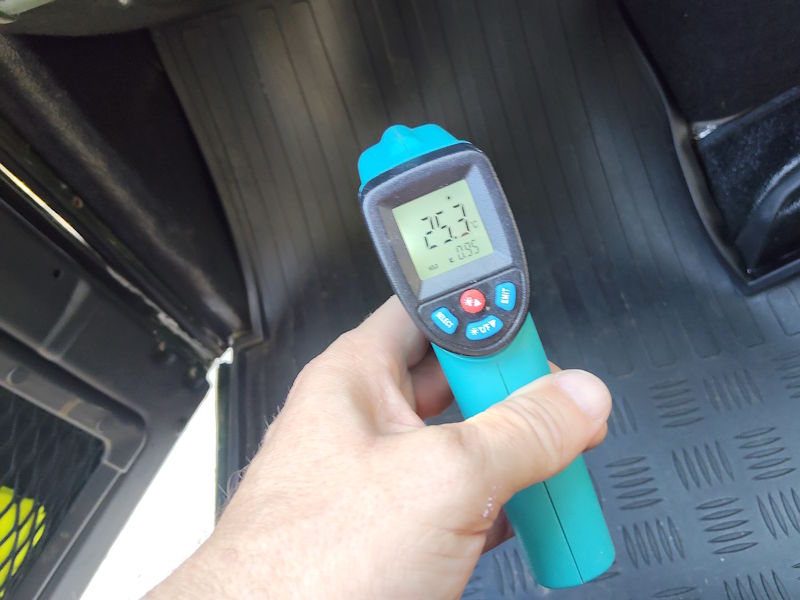 After: 25°C - Happy Passenger!
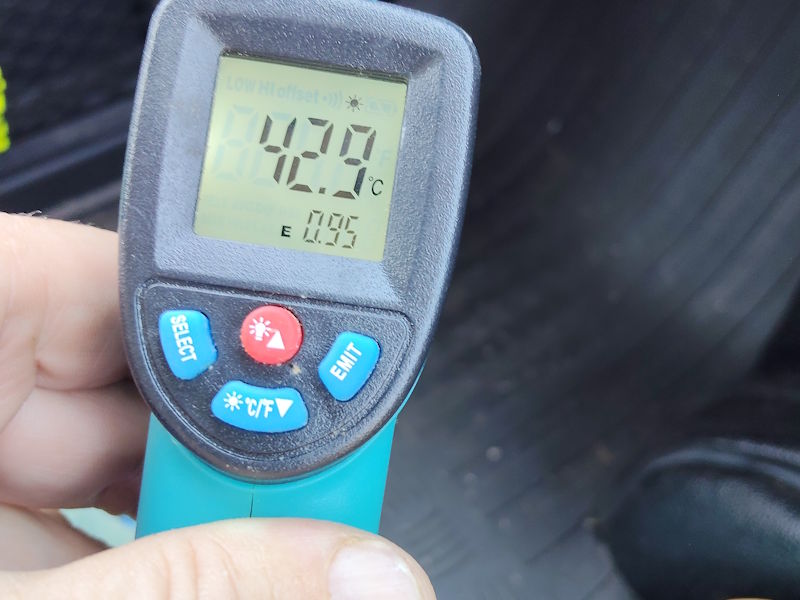 Before: 43°C - Unhappy Passenger!
Drag the slider left or right to see the 17°C temperature drop!
After a 3-hour drive on a 30°C day, radiant heat off the exhaust manifold literally cooked Lucy's feet - we measured the passenger footwell at a blistering 42.9°C! After implementing our multi-stage heat shielding fixes, a similar drive under identical conditions brought the footwell temperature down to a comfortable 28°C.
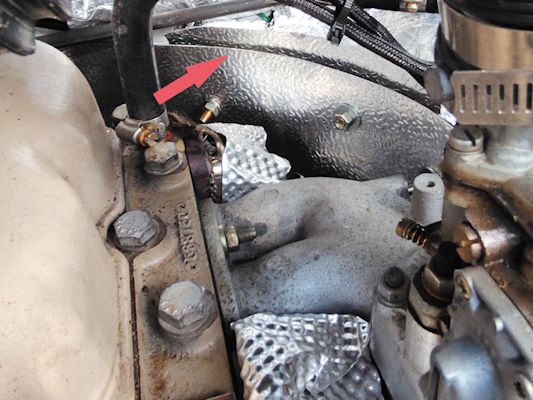 Step 1
Custom Manifold Heat Shield
What we did: Fabricated a dual-layer aluminium shield to cloak the exhaust manifold with an air-gap buffer.
How-To Guide: Trace card templates first, use 0.5mm thick aluminium sheets, and bolt with 5/16 UNF bolts to the two bolts on the intake manifold. Separate the two layers with a simple bolt between both sheets.
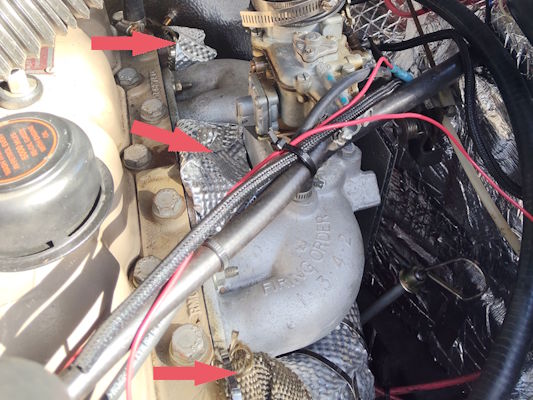 Step 2
High-Temp Exhaust Wrap
What we did: Wrapped headers and downpipe with heavy basalt/Titanium wrap (basically old volcano bits squashed and made into a fabric) locked with stainless steel ties. Some say this increases rust, but we will monitor it.
How-To Guide: Pull the wrap tight and secure with clamps or metal cable ties. Overlap the wrap by 50% to make it nice and thick. Cover with aluminium sheet offcuts and clamp it all together. You want to stop oil or fuel from being able to be soaked up by the wrap.
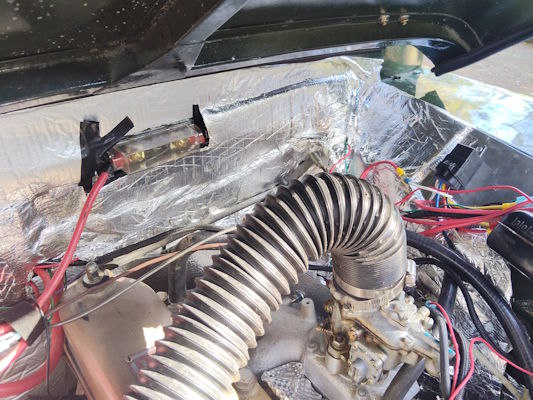 Step 3
Foam & Foil Firewall Insulation
What we did: Applied closed-cell acoustic foam with an aluminum foil barrier across the entire bulkhead on the passenger side and front wheel arch. No gaps, no hot air. Tests have shown that the engine bay is over 20 degrees cooler now!
How-To Guide: Degrease with isopropyl alcohol, roll down firmly to purge air bubbles, and seal seams with foil tape. Just like colouring in, but with foam.
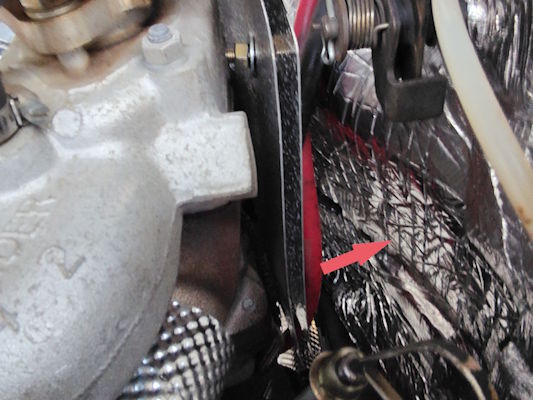 Step 4
Plugging Wheel Arch & Chassis Holes
What we did: Sealed stray wiring slots and chassis penetrations against hot draft air going to the passenger footwell.
How-To: Used offcuts of the aluminium sheets to create patch panels that were then riveted on with sealant underneath. In particular, the large hole that the exhaust pipe in earlier models routed through. Once filled, cover with the foam/foil sheeting. Just to make it pretty, I also gave the inside of the wheel arch a spray with black sound-deadening spray.
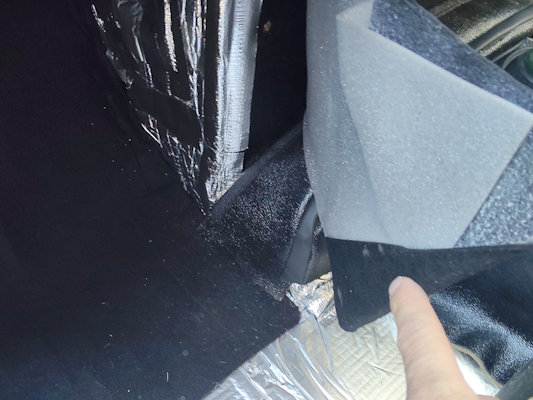 Step 5
Secondary Floor Shields & Lining
What we did: Installed dual-layer foam/foil shielding under floorboards above the gearbox tunnel.
How-To: Installed aluminium shields under the passenger floorboards, installed two layers of foam/foil above, and then glued 5mm thick foam to 4mm thick rigid felt and lined the entire cabin with it. The seatbox is covered with foam/foil and then covered with a thick soundproofing blanket.
Thermal Management
Keeping as Cool as Possible in a Vintage 4x4
Tackling the red dust of outback Australia and the sweltering humidity of equatorial Southeast Asia in a classic Series Land Rover means battling serious radiant heat. Here is how we engineered our climate control strategy to keep both the crew and the perishables alive.
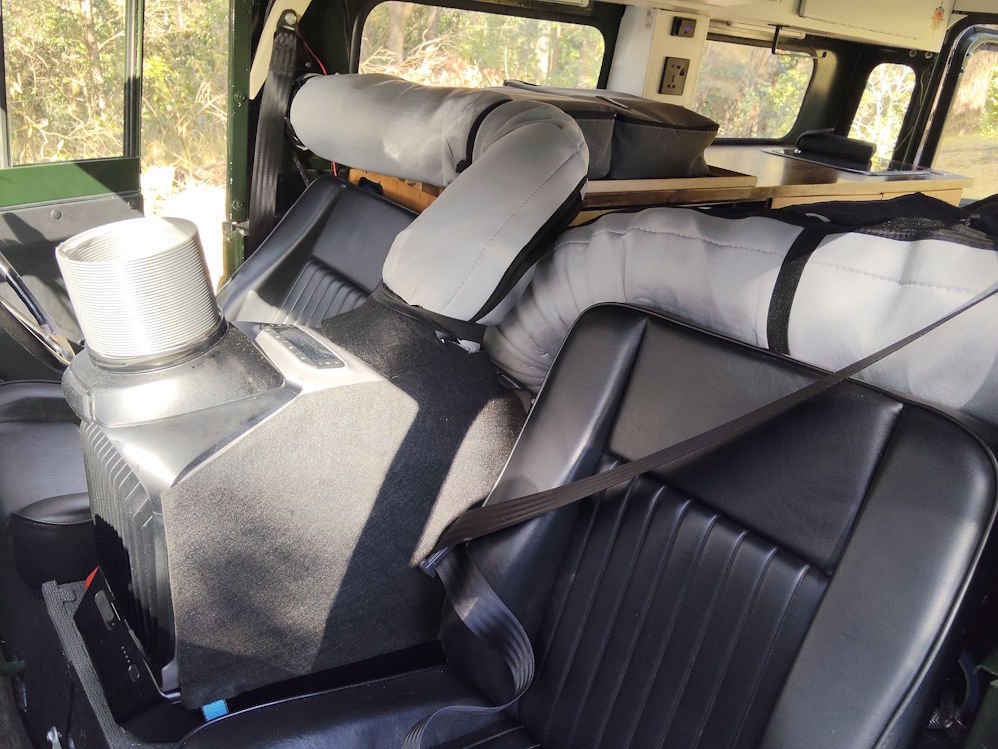
EcoFlow Wave 3 Air Conditioner: Taming the Tin Shed
An uninsulated, bare-aluminum Series Land Rover cabin is essentially a giant tin shed on wheels when parked under the blistering tropical sun. To stop the cabin from turning into a convection oven, we brought in serious reinforcements: an EcoFlow Wave 3 portable air conditioner.
Running strictly on its internal battery, the Wave 3 gives us roughly 3 hours of continuous cooling. However, paired with its dedicated 300W roof-mounted solar panel, that runtime extends to an impressive 4.5 to 5 hours during peak daylight hours and is more than enough for our maximum of 300km per day target.
If we stop at powered campsites or access mains supply, its rapid 240V mains recharging capability tops the battery back up to full in no time, ensuring we are always ready for the next scorching leg of the trip. Either that, or 3 hours in the afternoon sun charges it back to 100%. Is it ugly? Yes. Does it take up too much space? Yes. Is it a lifesaver in tropical heat? Absolutely!
Ceramic Window Tinting
Series Land Rovers are famous for their upright, flat glass windows, which basically act as giant magnifying glasses for the tropical sun. To stop the cabin from turning into a solar cooker, we applied a meticulous layer of high-performance ceramic window tint.
It drastically cuts down infrared heat transmission and glare, protecting our eyes during long hours behind the wheel and preventing the dashboard and interior vinyl from baking under intense ultraviolet radiation.
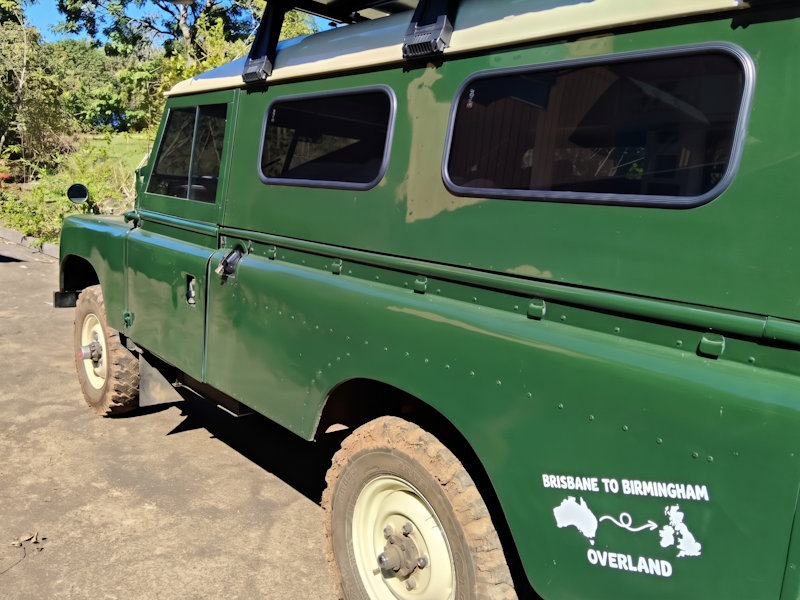 After Tint
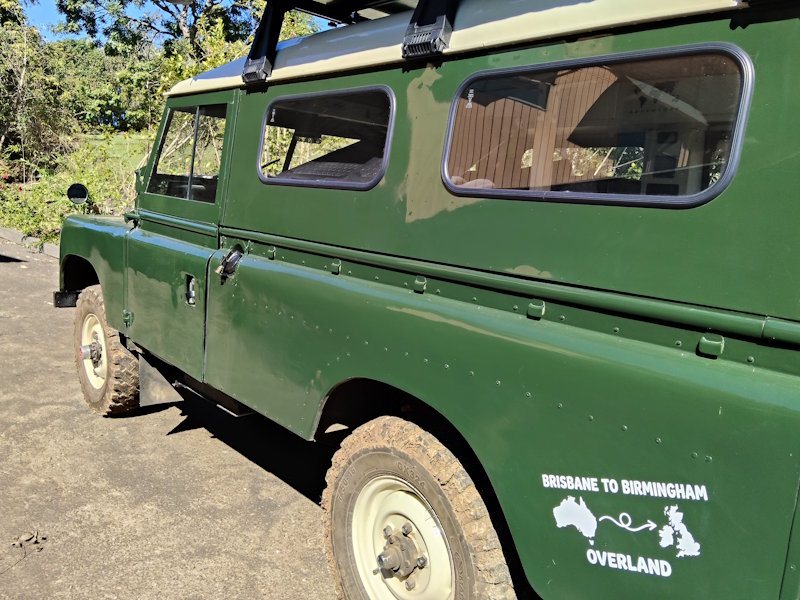 Before Tint
Drag the slider left or right to compare before and after tinting!
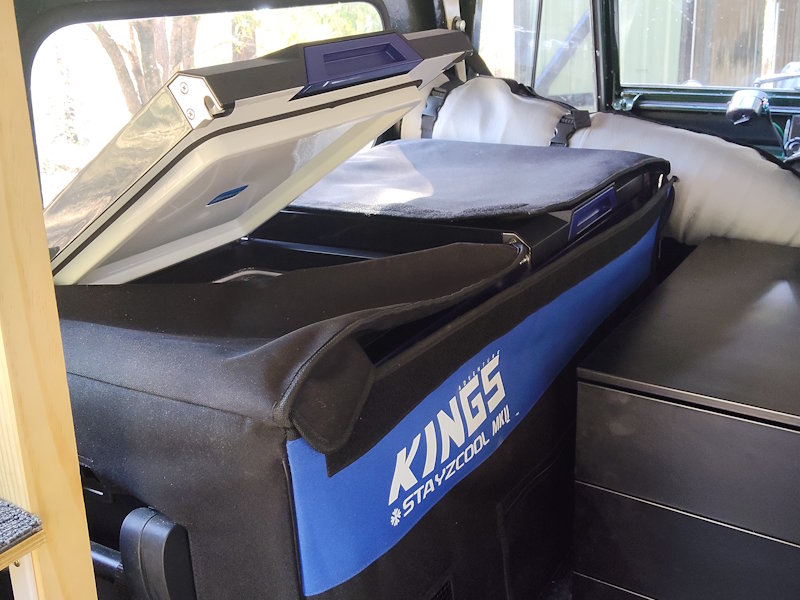
The 75L Dual-Zone Compressor Fridge
When ambient temperatures push past 40 degrees Celsius outside, morale depends entirely on the temperature of your beverages. Built right into our custom off-road camper setup is a heavy-duty 75-litre dual-zone compressor fridge/freezer.
This isn't just for keeping fresh rations viable across remote stretches, it is dedicated to maintaining a steady, uninterrupted supply of crystal-clear ice cubes. Because after a 300km day battling corrugations in a leaf-sprung vintage rig, cracking open an ice-cold drink at sunset is non-negotiable!
Element Defense
Dust Sealing & Monsoon Proofing (The Impossible Dream)
Let’s be honest: trying to make a Series 2 Land Rover completely dust-tight and monsoon-proof is a bit like trying to keep water inside a colander. Solihull built these rigs with gaps big enough to drop a spanner through, but that didn't stop us from trying anyway!
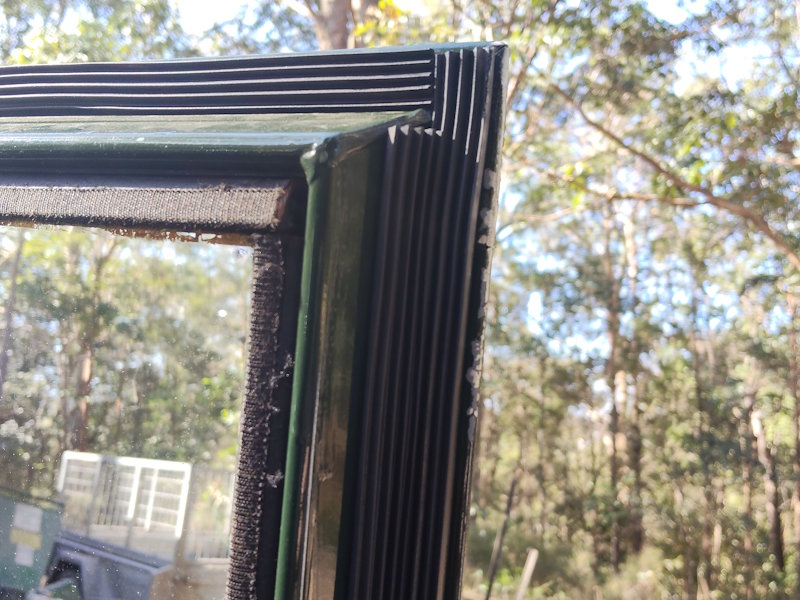
Silicone, Rubber Weather Stripping & High Hopes
Knowing we are facing fine red outback dust in Australia and torrential downpours in Southeast Asia, we went on an absolute sealing rampage across the tub and cab:
- Silicone Every Joint: We laid down flexible marine-grade silicone sealant along every tub panel overlap, seat box seam, and floorboard join.
- Extra Door Weather Stripping: Added secondary bulbous rubber seals around the door perimeters to fill the legendary Solihull panel gaps.
- Flap & Vent Seals: Replaced ancient perished rubber seals on the front bulkhead flap vents.
Realistic Verdict: Will it completely keep out torrential monsoon rain and microscopic bull-dust? Absolutely not - it leaks like a sieve! But hey, it was definitely worth a crack, and every bit helps keep the worst of it outside.
Vehicle Security
Securing a Series Land Rover (And The Natural Theft Deterrents)
In many parts of the world, vintage 4x4s are hot targets for would-be thieves. Leaving a restored Series 2 parked on foreign streets requires serious security layers - backed by the vehicle's own built-in anti-theft quirks!
Hardware & Active Anti-Theft Protection
We won't reveal every trick up our sleeves, however there are a few things you can do to fortify a Landy with multiple physical and electronic layers to help keep it firmly planted where you left it:
- Anti-Burst Door Locks: Replace the flimsy factory slam-shut latches with heavy-duty anti-burst locks, backed by custom reinforcement supports and shims behind the catches for double strength.
- Engine Immobiliser: Install a hidden electrical kill-switch configuration to stop hot-wiring attempts in their tracks. Half the time they don't want to start anyway!
- Live GPS Tracker: Install a discreet satellite tracking device, so you can monitor the Landy's location from anywhere on earth. (well, anywhere with a mobile recreption). Also add an AirTag or similar, for good measure!
- Pedal & Steering Locks: Use visual mechanical deterrents, including heavy steel clutch/brake pedal locks and steering wheel clamps. These bright yellow devices clash with your paint colour scheme, but they are very visible!
- Remote Car Alarm: Use a local remote-controlled alarm system to startle anyone attempting a break-in. These can be motion and light activated and are very loud inside a metal box on wheels.
Built-in "Millennial & Thief" Deterrents
Apart from hardware locks, an old classic Series Land Rover comes equipped with incredible natural anti-theft engineering straight out of the Cold War era:
- The Manual Gearbox & Clutch Pedal: Instantly confuses 95% of modern drivers under 30 who have never seen a third pedal in their life.
- Un-synchromeshed 1st & 2nd Gears: Trying to select 1st or 2nd without crunching the gears will baffle anyone under 40 who lacks vintage double-declutching experience.
- The Manual Choke Lever: Good luck getting the 2.25 petrol motor to catch and idle on a cold morning without knowing the secret choke handshake!
- Appalling Fuel Economy: Even if a thief manages to get it started, the atrocious fuel economy guarantees they won't make it very far down the road before running dry!
- The Rogue Fuel Gauge: Thanks to an incorrect sender unit, the fuel gauge randomly oscillates between "Full" and "Empty," leaving any unauthorised driver in a constant state of panic!
The 8 Golden Rules of Our Worldwide Overland Driving in The Landy
When you're crossing the globe in a 60-year-old vehicle, comfort isn't just about air conditioning - it's about survival mindset and mechanical preservation. These are our golden rules: